


Sesto was born in Santarcangelo di Romagna on May 29, 1932, to a bricklayer father and a homemaker mother.
During an Allied bombing raid on Rimini in 1943, his father was killed; Sesto was only 11 years old.
He attended the Einaudi Vocational Institute in Rimini and later worked in the accounting department of the local Fornace (brick factory) in Santarcangelo di Romagna.
In the early 1950s, Sesto moved to Germany, where he worked as a factory worker, and subsequently to England, where he found employment as a maître d’hôtel.
At a New Year’s Eve party in 1964, Sesto met Susanne. They married on June 28, 1965, in London during his lunch break.
It was in London that Sesto discovered some of the most illustrious masters of painting during his frequent visits to the Tate and the National Gallery: from Turner to Van Gogh, as well as Monet and Gauguin, to name just a few.
Lacking a proper studio in which to paint, Sesto enjoyed creating works in India ink, sometimes using both sides of the page so that the two depicted images seemed to “tell” diametrically opposed stories.
In 1966, he returned to Italy and worked for six months in Gabicce Monte at the “Vigna del Mare” Hotel before moving back to England with his wife to Reading—Susanne’s hometown on the Thames west of London—where he continued to work in hospitality while spending his spare time restoring their newly purchased home.
In 1972, he relocated with his family—now joined by two children aged 5 and 1—to Cirencester, a town of Roman origin near Wales, where he acquired an old cafe and transformed it with his own hands into the restaurant “Sesto’s”. During this period, he took up woodcarving, producing medieval- and biblically-inspired imagery.
In 1977, Sesto sold the restaurant and decided to return to Reading, buying a home in the residential neighborhood of Tilehurst, six kilometers from the town center.
However, this was only a temporary move in preparation for his return to Italy.
In November 1979, the whole family moved to Igea Marina, staying in Sesto’s sister’s hotel (closed for the winter season) while Sesto devoted himself to restoring a farmhouse purchased the previous summer in Borghi, intending to convert it into an agritourism estate.
Unfortunately, the restoration proved more time-consuming than expected; in May 1980, the farmhouse was sold, and the family relocated to San Martino dei Mulini.
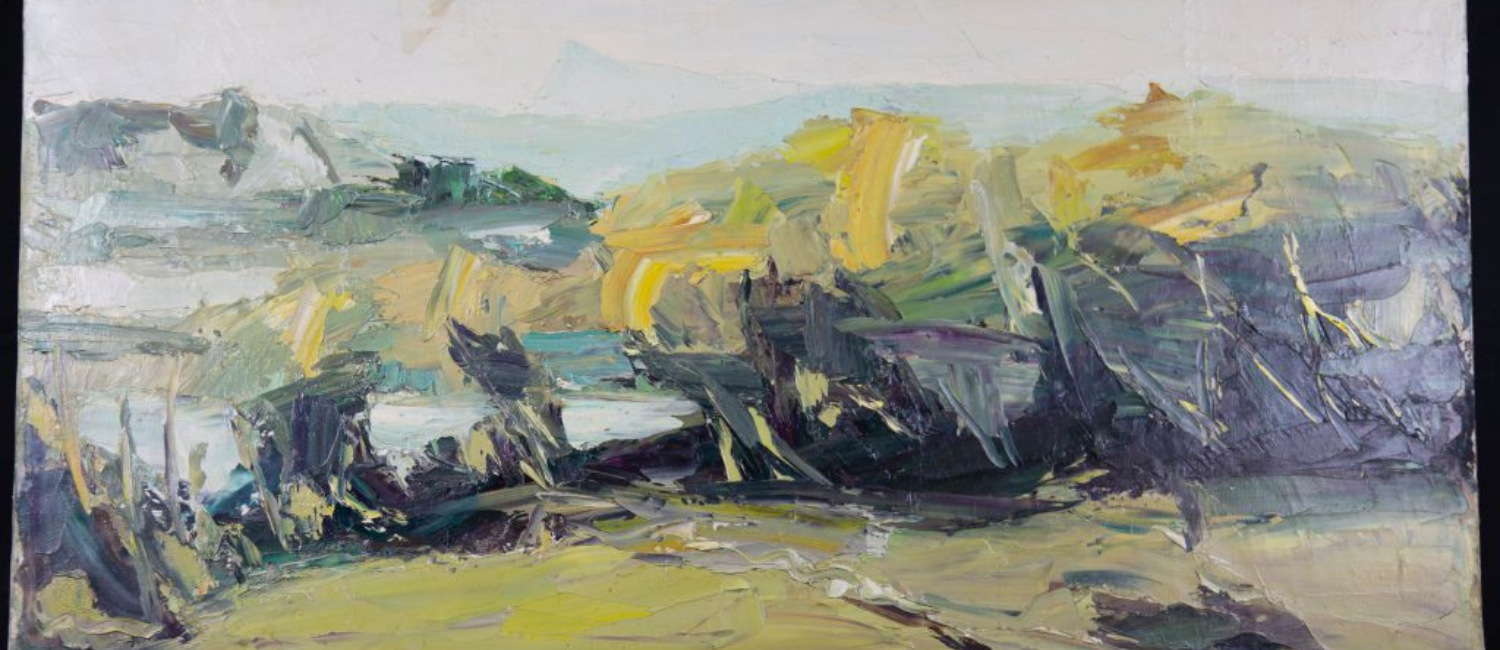
Here, Sesto set up a small studio where he began to earnestly devote himself to oil painting after work and on weekends. He experimented with various techniques, favoring the palette knife (“a spatola”) approach for its highly textured, tactile (“materica”) quality, which allowed him to blend his passion for color with that of form.
The final years of his life were marked by a battle with illness, which nevertheless failed to deter him from painting for as long as his physical condition permitted.
Sesto passed away in Santarcangelo on January 24, 1994.