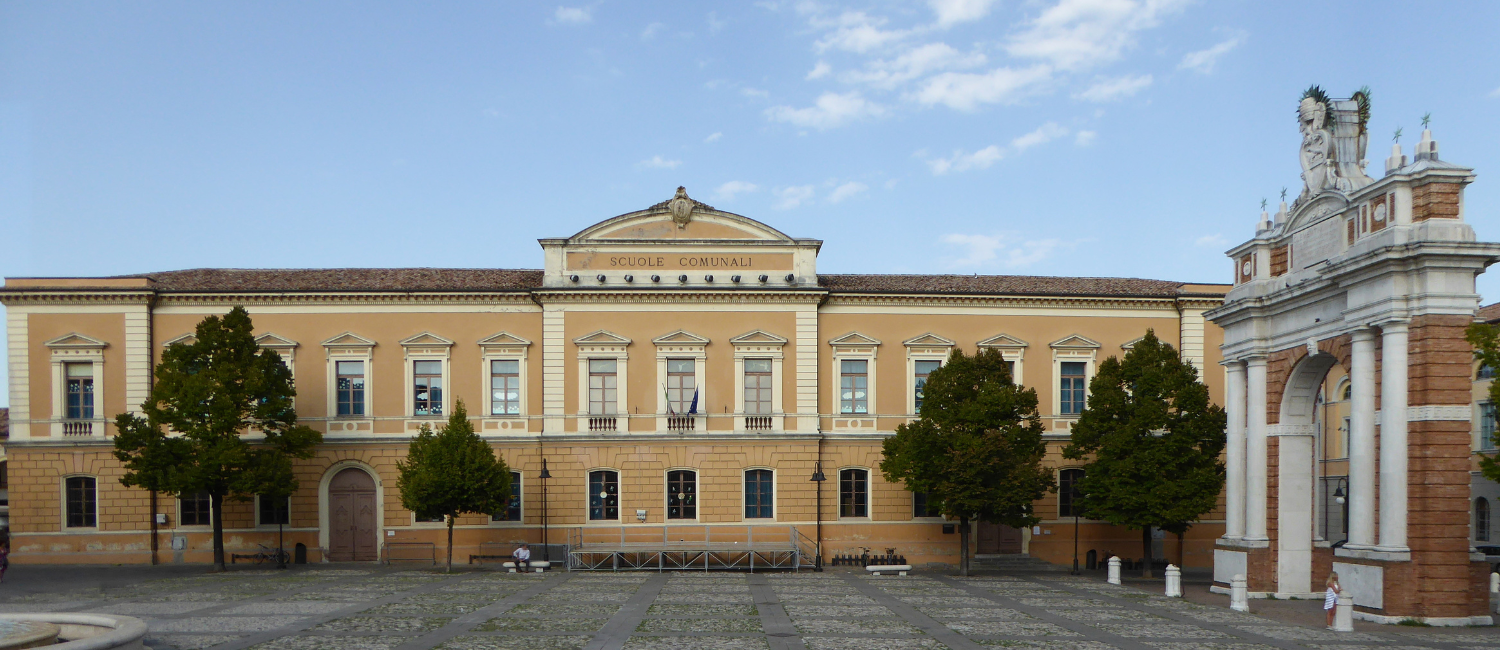
In 1890 the town’s Municipal Schools were inaugurated.
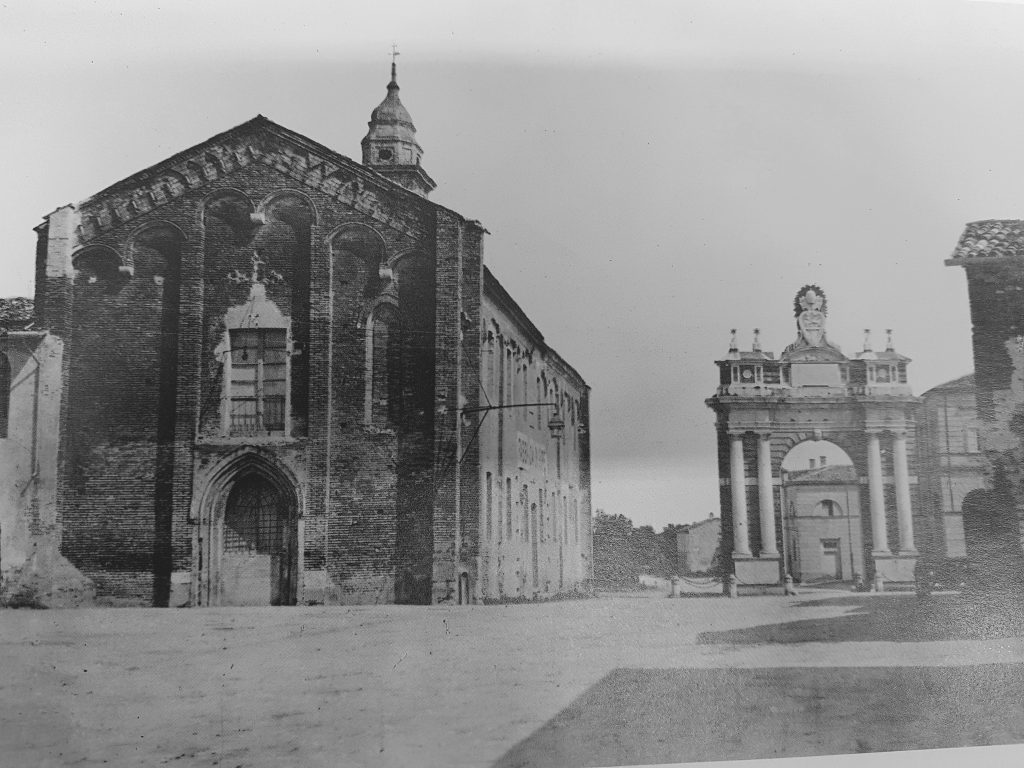
They stand where, until 1886, there was a church with an adjoining convent that had belonged to the Conventual Franciscans, who had founded it in the 14th century.
Situated outside the walls of the town, on the Via Emilia, in a flat area, it was close to the urban area reserved for markets and fairs.
An old, melancholy photograph shows the imposing size and Gothic forms of the single nave to which, between the fifteenth and seventeenth centuries, several chapels were added, though they were no longer there by the second half of the nineteenth century.
The Church and convent were suppressed first in 1805, in the Napoleonic era, and definitively in 1862.
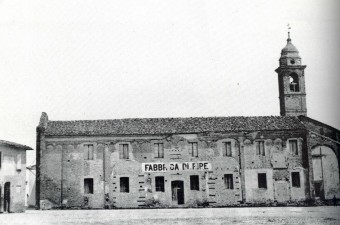
The Church was initially used as a military depot and then as a pipe factory.
The whole complex has now become the Maria Pascucci Primary School, which overlooks Piazza Ganganelli, the main square of the town.
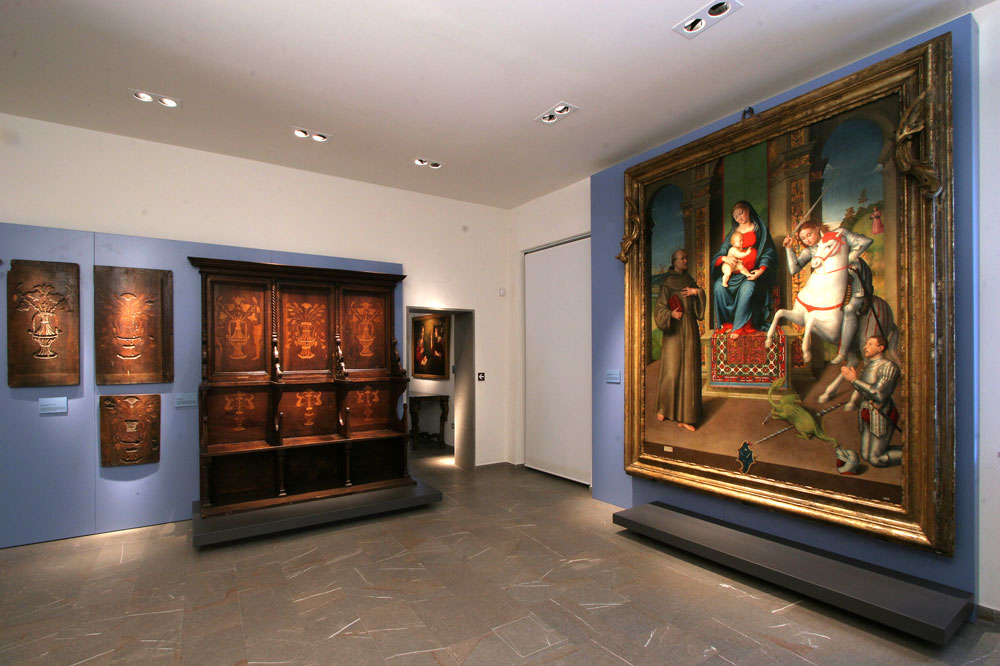
The artworks of the Convent were saved and are now kept in the Historical and Archaeological Museum of the Town.
They are remarkable works of art, such as the polyptych of 1385 by Jacobello di Bonomo, with its beautiful frame intact, which includes the Madonna and Child, the Crucifixion and the Saints.
Or the altarpiece by Luca Longhi, from 1531, donated by Antonello Zampeschi: a Madonna and Child, Saints and Donor.
The Museum also holds inscriptions, tombstones and wooden inlays from the ancient Church.